
*
🌾如何饲养无麸质天然酵母
—— 谷留香自磨糙米 × 天然发酵指南

🥣 什么是无麸质天然酵母?
天然酵母(Natural Starter / Sourdough Starter)是利用谷物与环境中的天然酵母菌、乳酸菌,通过“持续喂养”培养出来的天然发酵种。
和传统小麦酵母最大不同是:
✔ 无麸质酵母没有 gluten 架构,所以不一定膨胀 3–4 倍,这是正常的
✔ 糙米天然酵母会以“细泡+稳定膨胀”为主
✔ 风味温和、酸味较轻
✔ 非常适合米面包、米蛋糕、无麸质烘焙
1️⃣ 为什么选择 糙米 来饲养天然酵母?
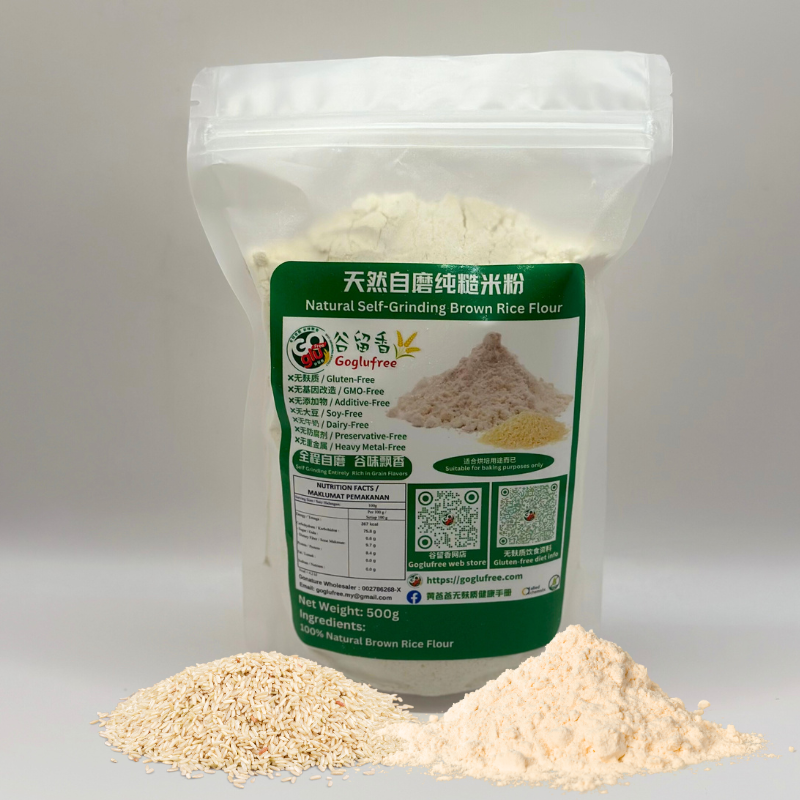
谷留香采用的自磨糙米(冷磨)非常适合发酵,原因如下:
🌟 富含维生素 B 群
酵母成长最重要的营养来源。
🌟 天然油脂+矿物质丰富
让 starter 更活跃、稳定、不容易失败。
🌟 冷磨技术保持活性营养
酵母更容易“醒来”,发酵速度更快。
🌟 味道温和,不易过酸
让米面包风味更干净、谷香更明显。
2️⃣ 准备材料(1:1 )比例
📌 自磨糙米粉:20g 或 50g
📌 温水(不超过 40°C):20g 或 50g
📌 干净玻璃瓶
📌 搅拌刮刀 / 勺子
3️⃣ 开始培养(Day 1 – Day 5)
🌟 Day 1 — 启动 Starter
- 加入
- 糙米粉 20g
- 水 20g
- 搅拌均匀
- 盖上(不要密封紧)
- 室温静置 24 小时
📌 提示:酸种味道不会太明显,米糊不会马上有明显变化。
🌟 Day 2 — 第一次喂养
你会看到少量气泡或顶部略微鼓起。
步骤:
- 倒掉一半(避免酸度累积)
- 重新加入
- 糙米粉 20g
- 水 20g
- 搅拌均匀,盖上静置
*如果采用黄爸爸提供的菌母,就不必倒一半!
*这是从零开始养才需要的步骤。
🌟 Day 3–5 — 酵母进入活跃期
每天重复:
- 倒掉一半
- 加粉 20g + 水 20g
- 搅拌、盖上、静置
你会看到:
✔ 气泡变多
✔ 膨胀
✔ 质地蓬松、糊体变轻
✔ 酸味轻微但干净
✔ 谷香更明显
这代表酵母已经成功活化!
4️⃣ 成功的无麸质酵母
📌 在 4–8 小时内上升到 0.5 - 1倍
📌 表面出现许多细泡
📌 味道酸香、不会腐臭
📌 质地像浓稠酸奶 / 奶油糊
✔ 无麸质 Starter 不追求膨胀三倍,是正常的!
米粉没有麸质网络,膨胀幅度自然较小,但细泡越多代表越健康。
5️⃣ 不常做面包?如何保存?
📍 冷藏保存(适合忙人)
- 放入冰箱冷藏室
- 一周喂养一次:20g 糙米粉 + 20g 水
冷藏会让酵母“慢速生长”,更好照顾。
📍 超过 2 周没喂?
- 丢掉 70–80%
- 连续喂养 2–3 天
即可恢复活性。
6️⃣ 常见问题(FAQ)
❓ 为什么不膨胀到三倍?
无麸质 starter 靠细胞壁+天然黏性支撑,
🌾 发酵不到2-3倍是正常且非常健康的状态!
❓ 酸味有点重怎么办?
➡ 连续喂养 2–3 天
➡ 或增加喂养比(1:2:2 或 1:3:3)
❓ 顶部有水分(hooch)?
这是酵母饿了的信号。
➡ 喂一次即可恢复。
❓ 米粉可以换糙米、小米、黑米?
可以,但:
📌 建议 starter 始终使用“单一米粉”饲养
📌 烘焙时才用 Starter + 其他谷物粉制作面糊
这样 starter 稳定性最好。
7️⃣ 如何让酵母更健康?
🔸 使用冷磨米粉(营养完整)
🔸 室温 26–30°C 最佳
🔸 不要用热水
🔸 玻璃瓶最佳
🔸 使用含矿物质的水(酵母更活跃)
🔸 每次喂养后搅拌要充分,让氧气进到面糊里
🍞 【结语】
培育无麸质天然酵母并不困难,
它就像一个慢慢成长的小生命:
🌱 给它干净的环境
🌱 给它营养
🌱 给它规律的喂养
它就会回报你 ——
更蓬松的米面包、更香的谷味、更安心的烘焙体验。
------------------------
🥣 What Is a Gluten-Free Natural Starter?
A natural starter (Natural Starter / Sourdough Starter) is a naturally fermented culture made by cultivating wild yeast and lactic acid bacteria from grains and the surrounding environment through continuous feeding.
The biggest difference compared to traditional wheat starters is:
✔ Gluten-free starters do not have a gluten structure, so they may not expand 2-3 times in size — this is completely normal
✔ Brown rice starters usually develop through fine bubbles and stable fermentation activity
✔ The flavor is milder with lighter acidity
✔ Very suitable for rice bread, rice cakes, and gluten-free baking
1️⃣ Why Choose Brown Rice for Feeding a Natural Starter?
The freshly home-ground brown rice flour (cold-milled) used by Goglufree is especially suitable for fermentation because:
🌟 Rich in Vitamin B Complex
An important nutrient source for yeast growth.
🌟 Naturally Rich in Oils & Minerals
Helps the starter stay more active, stable, and less likely to fail.
🌟 Cold-Milling Preserves Natural Nutrients
Allows the yeast to “wake up” more easily and ferment faster.
🌟 Mild Flavor with Lower Acidity
Creates cleaner-tasting rice bread with a stronger natural grain aroma.
2️⃣ Ingredients Needed
📌 Freshly ground brown rice flour: 20g
📌 Warm water (below 40°C): 20g
📌 Clean glass jar
📌 Spatula or spoon
3️⃣ Starting Your Starter (Day 1 – Day 5)
🌟 Day 1 — Start the Starter
Add:
• 20g brown rice flour
• 20g water
Mix well.
Cover loosely (do not seal tightly).
Leave at room temperature for 24 hours.
📌 Note:
The sour smell may not be obvious at first, and the mixture may not change much immediately.
🌟 Day 2 — First Feeding
You may notice a few bubbles or slight rising on top.
Steps:
• Discard half of the starter
(to prevent excessive acidity buildup)
Then add:
• 20g brown rice flour
• 20g water
Mix well and leave covered at room temperature.
📌 If you are using Papa Huang’s prepared starter culture, you do NOT need to discard half.
📌 This discard step is only necessary when starting from scratch.
🌟 Day 3–5 — Active Fermentation Stage
Repeat daily:
• Discard half
• Add 20g flour + 20g water
• Mix, cover, and rest
You will gradually notice:
✔ More bubbles
✔ Expansion up to 0.5 - 1 times
✔ Lighter and fluffier texture
✔ Mild clean sour aroma
✔ Stronger grain fragrance
This means your starter is successfully activated!
4️⃣ Signs of a Healthy Gluten-Free Starter
📌 Rises 0.5- 1 times within 4–8 hours
📌 Many fine bubbles on the surface
📌 Pleasant sour aroma without foul smell
📌 Texture similar to thick yogurt or creamy batter
✔ Gluten-free starters are NOT expected to triple in size — this is normal!
Since rice flour has no gluten network, expansion is naturally smaller.
More fine bubbles = a healthier starter 🌾
5️⃣ Don’t Bake Often? How to Store It
📍 Refrigerator Storage (Best for Busy People)
Store in the refrigerator.
Feed once a week with:
• 20g brown rice flour
• 20g water
Cold storage slows fermentation and makes the starter easier to maintain.
📍 Haven’t Fed It for More Than 2 Weeks?
• Discard 70–80% of the starter
• Feed continuously for 2–3 days
The starter should regain its activity.
6️⃣ Frequently Asked Questions (FAQ)
❓ Why doesn’t it rise 3 times?
Gluten-free starters rely on natural stickiness and cell structure instead of gluten.
🌾 A 1-2 times rise is already healthy and normal!
❓ What if the sour smell becomes too strong?
➡ Feed continuously for 2–3 days
➡ Or increase the feeding ratio (1:2:2 or 1:3:3)
❓ Why is there liquid on top (hooch)?
This is a sign that the starter is hungry.
➡ Simply feed it once to recover.
❓ Can I use millet, black rice, or other rice flours?
Yes, but:
📌 It is recommended to keep feeding the starter using ONE type of flour consistently.
📌 Use other grains only when preparing the final bread batter.
This gives the best starter stability.
7️⃣ How to Keep Your Starter Healthy
🔸 Use cold-milled rice flour (more complete nutrition)
🔸 Ideal room temperature: 26–30°C
🔸 Do not use hot water
🔸 Glass jars work best
🔸 Mineral-rich water helps yeast become more active
🔸 Mix thoroughly after each feeding to incorporate oxygen into the batter
🍞 Final Thoughts
Cultivating a gluten-free natural starter is not difficult.
It is like raising a small living culture slowly over time:
🌱 Give it a clean environment
🌱 Give it nutrition
🌱 Feed it consistently
And it will reward you with:
👉 Softer rice bread
👉 Richer grain aroma
👉 A more安心 and enjoyable gluten-free baking experience