
无麸质烘焙基础知识 / Gluten-Free Baking Basic
1. 无麸质烘焙与一般烘焙有什么不同
无麸质烘焙和一般烘焙最大的不同,在于面粉里的结构不同。
一般小麦面粉含有麸质,揉拌后会形成有弹性的面筋网络,帮助面团包住发酵产生的气体,让面包膨胀,也带来熟悉的韧性与拉丝口感。
无麸质面粉不含小麦麸质,面团不会形成同样的面筋网络。因此通常要靠谷物粉、淀粉、纤维、鸡蛋或胶类等配料,帮助面糊支撑、保水和定型。制作时的面团状态、搅拌方式、发酵表现和成品口感,也会和一般面包不同。
简单来说:无麸质烘焙不能直接照搬小麦面包的配方与操作,需要依照面粉的组成和特性来调整。
谷留香米面包食谱,是黄爸爸根据谷留香预拌粉的配方结构研发的。使用其他品牌或不同配方的预拌粉,成品效果可能会不同。
2.酵母、油和谷粮在米面包配方中的作用
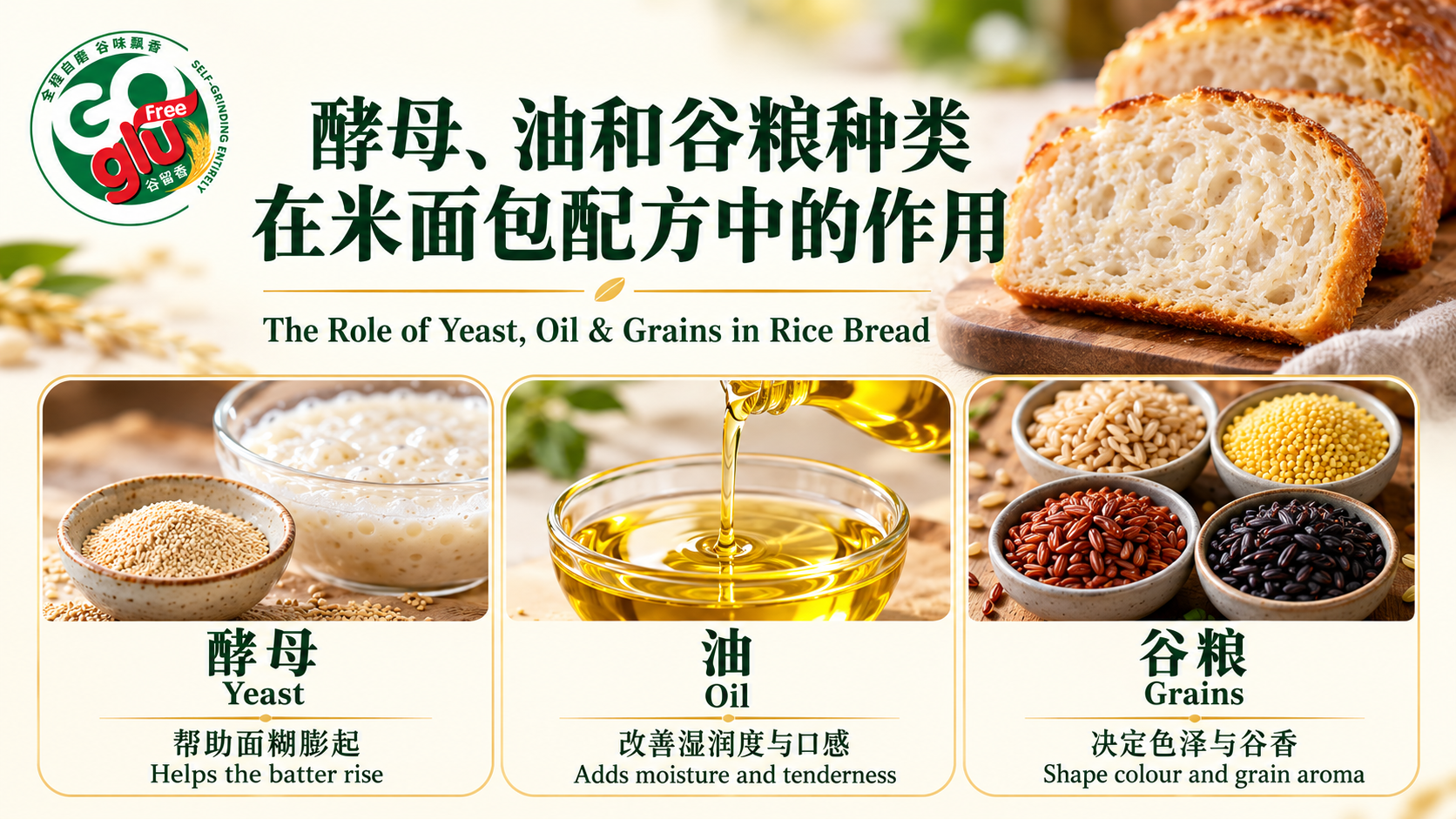
酵母|帮助面包发酵
酵母利用配方中的糖分发酵,产生气体,让面糊膨胀,帮助面包形成蓬松的组织。发酵时间和环境会影响面包的高度与口感。
油|增加柔软与润泽感
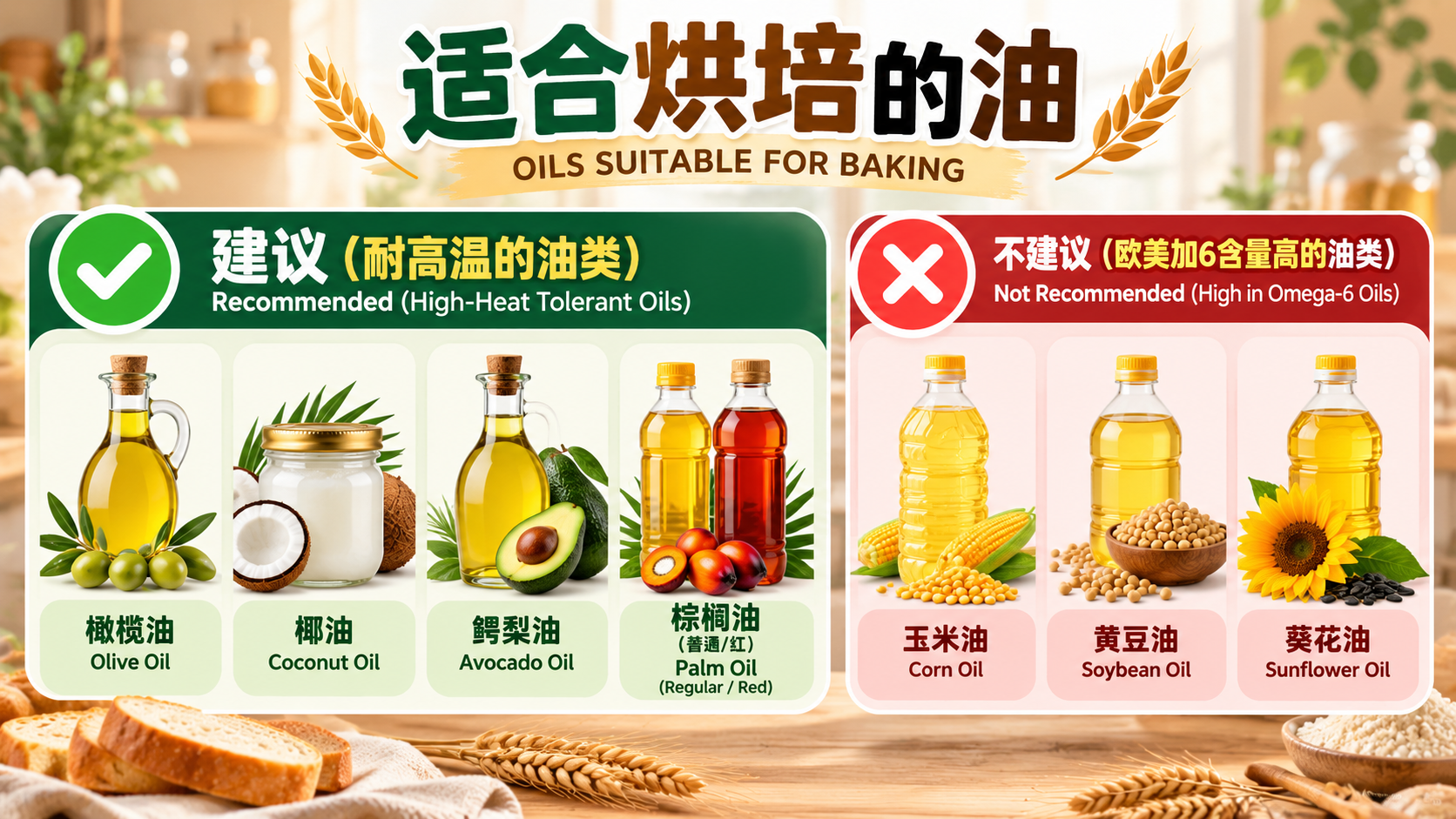
油能让面包口感较柔软、湿润,也有助于改善入口时的顺滑感。用量和种类不同,成品的香气与质地也会有所变化。但选择适合对的烘培油类也非常重要。
谷粮|带来风味与口感特色
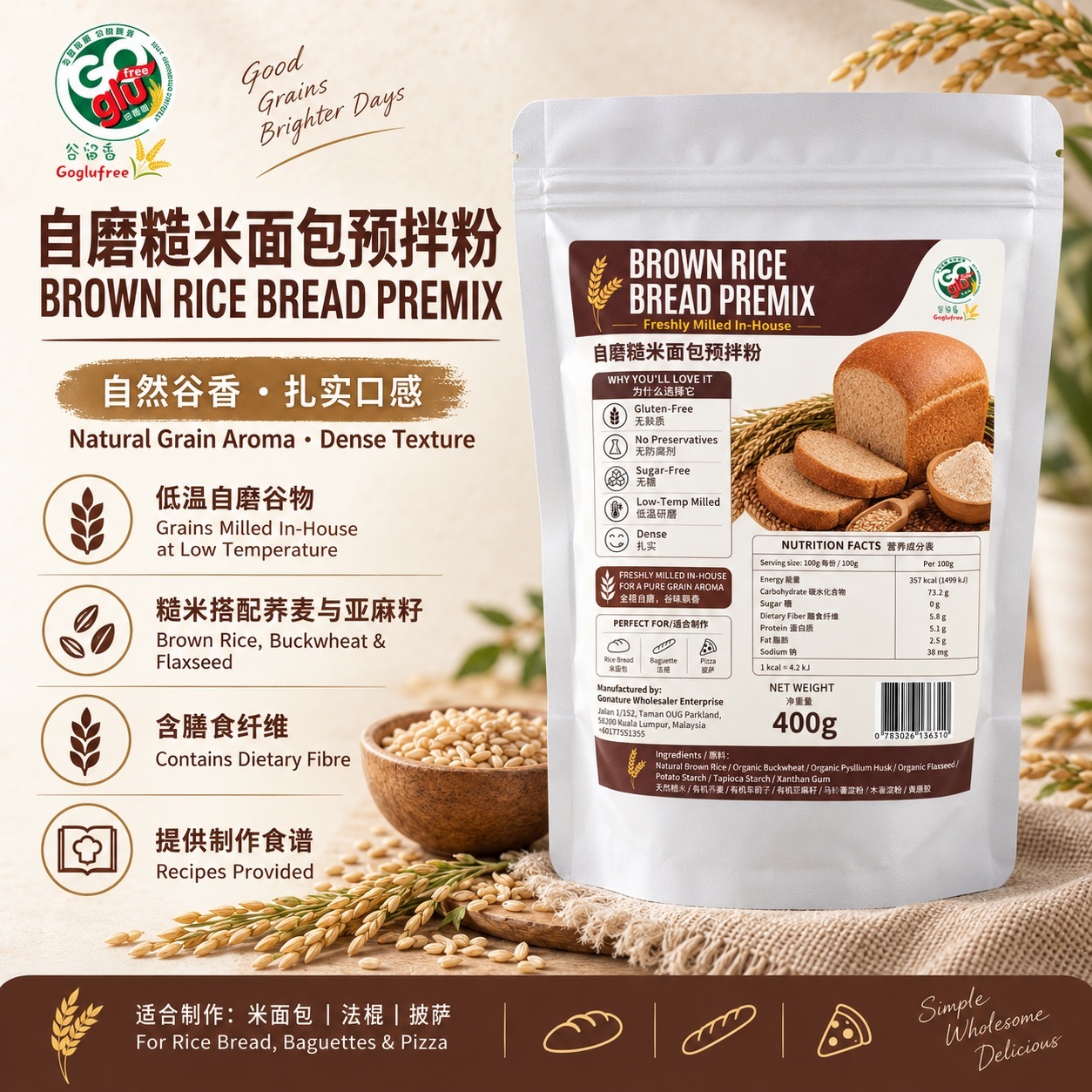
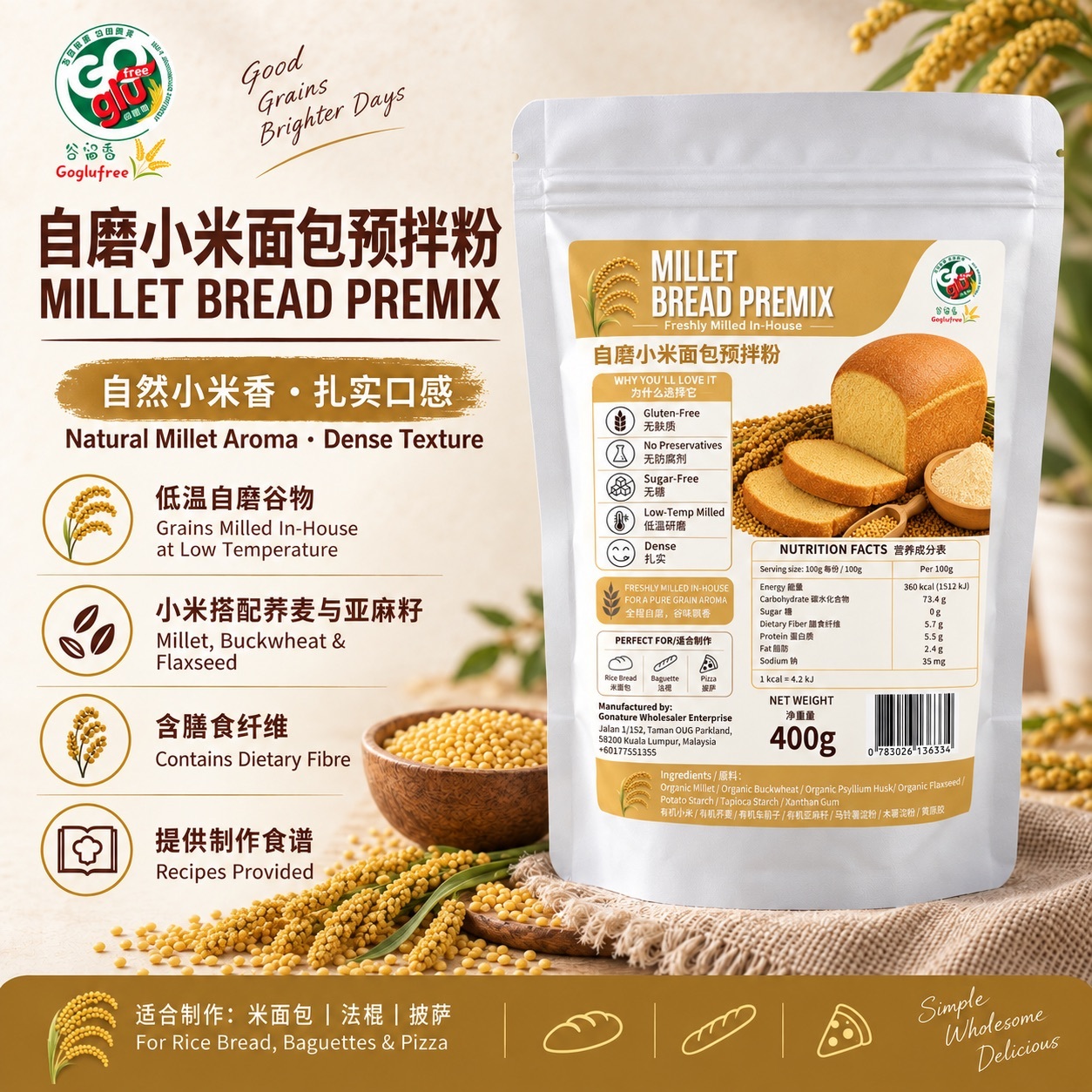
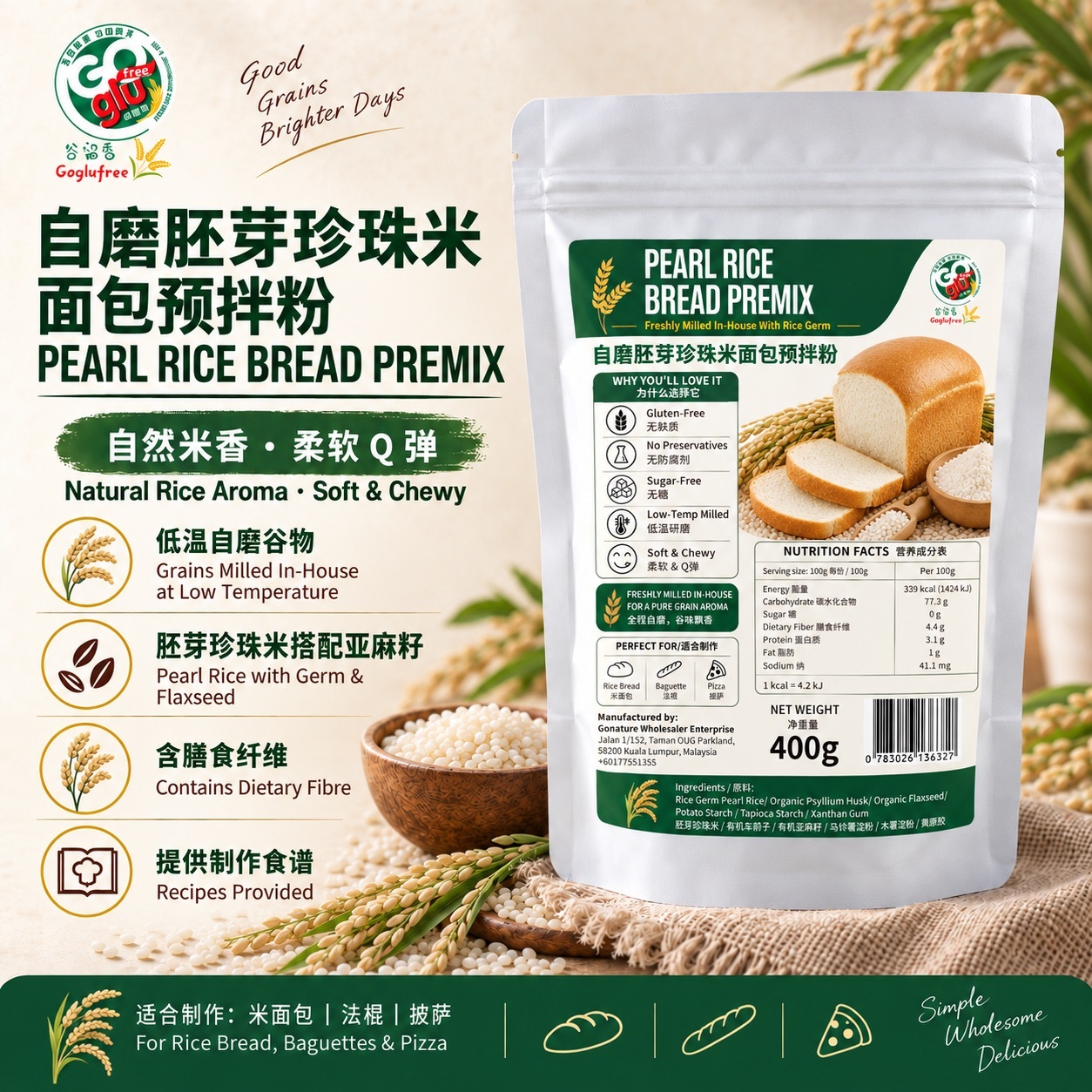
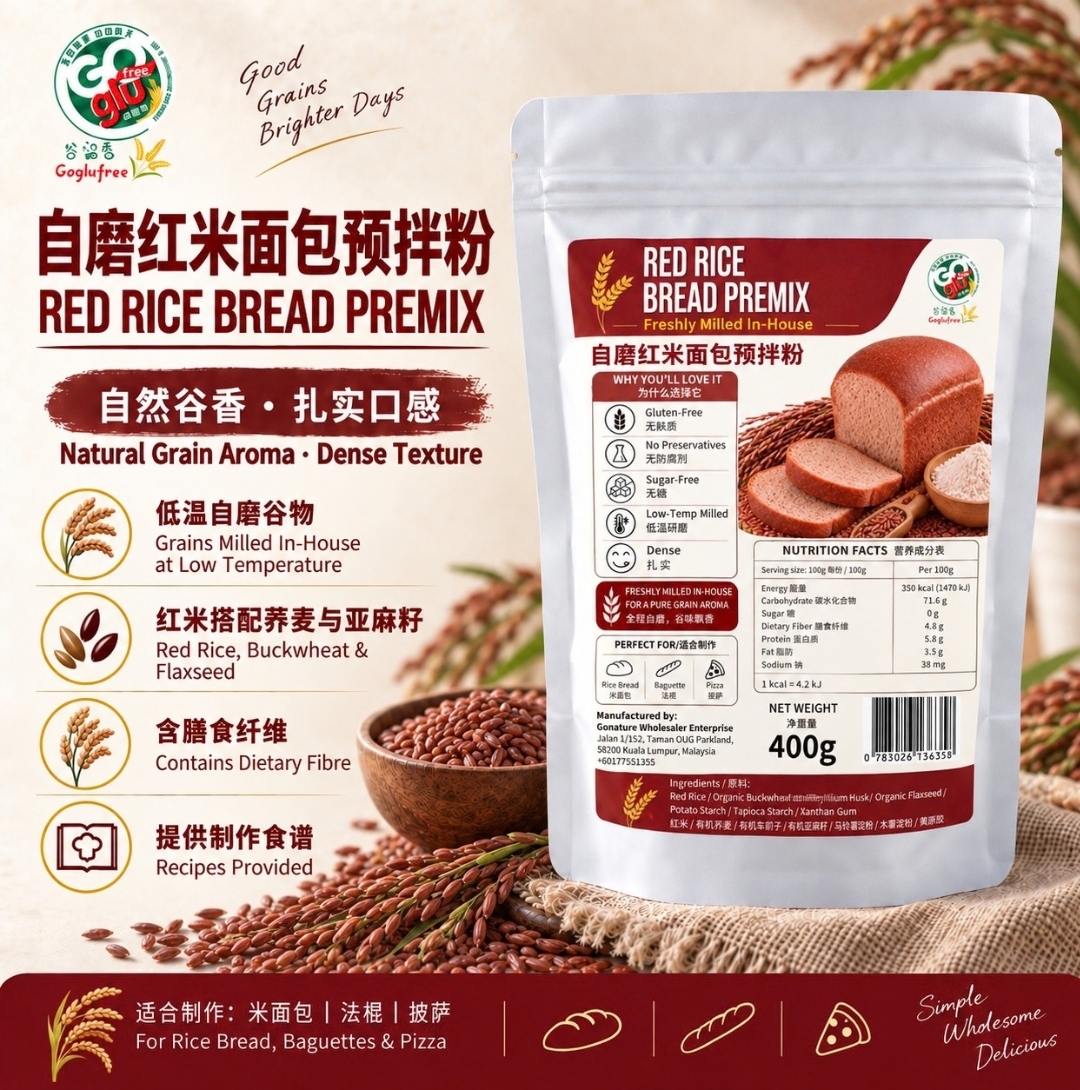
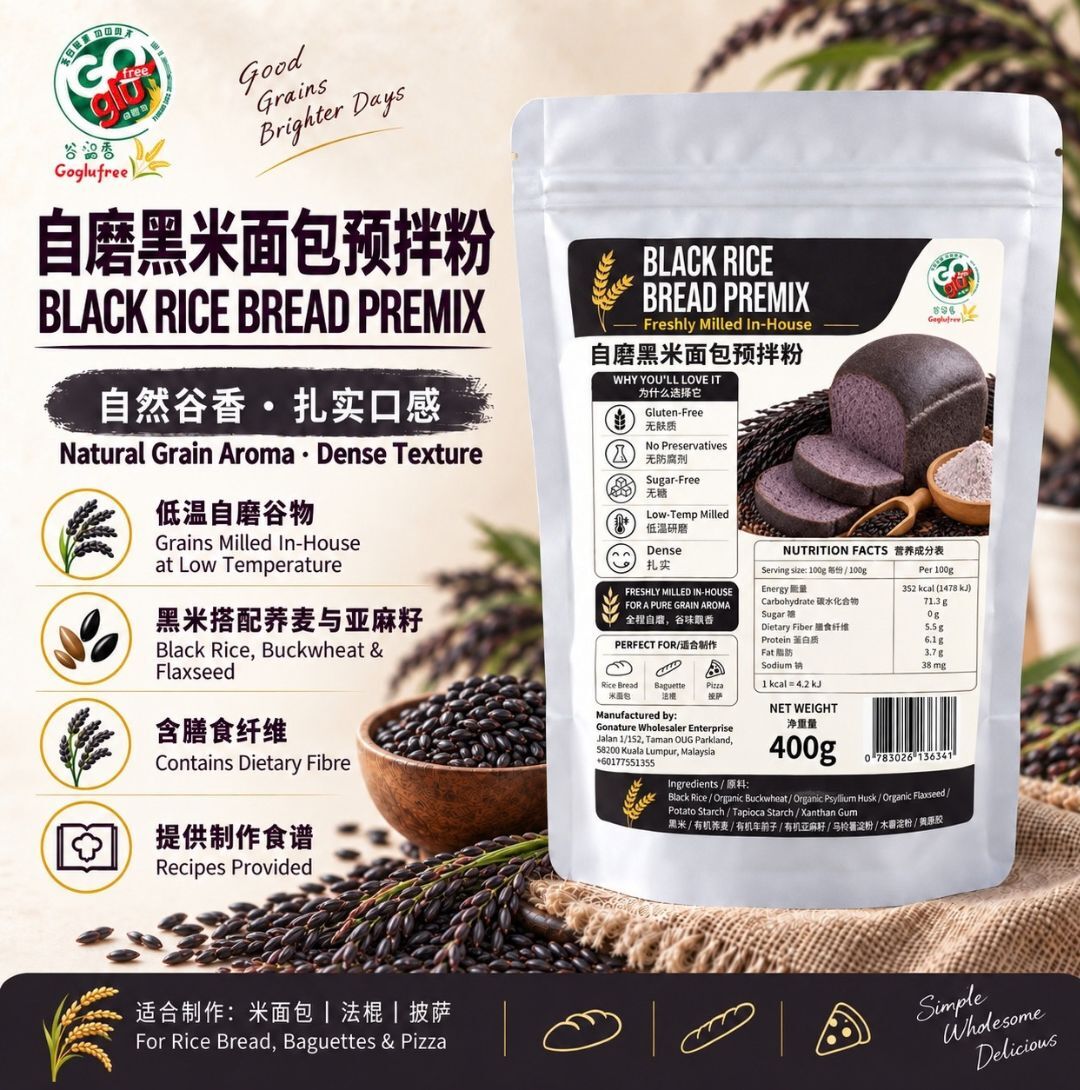
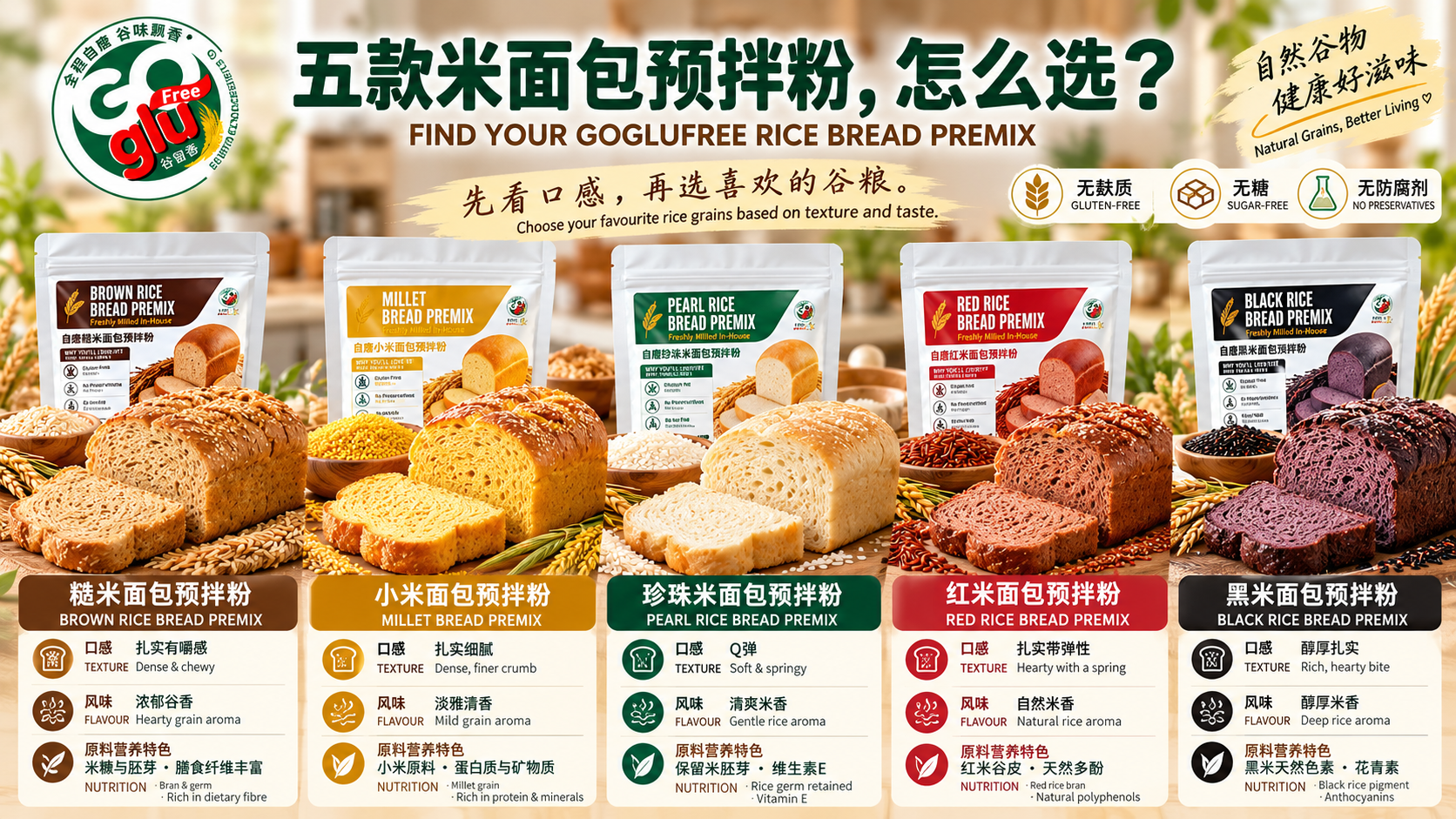
不同谷粮会带来不同的颜色、香气和口感。例如糙米、小米、黑米、红米和珍珠米,制作出的面包风味各有不同。谷粮粉的吸水性与细致程度也会影响面糊状态和成品质地,因此配方需要根据粉的特性设计。
**小提醒:**谷留香米面包的配方是根据对应预拌粉的组成研发的。更换预拌粉品牌或自行调整材料比例,可能会影响发酵和成品效果。
3.烘焙器具:专业设备与家用简易器具
制作【谷留香】米面包不一定要准备一整套专业烘焙设备。了解器具的用途,并选择适合自己的工具,就可以开始练习。
专业设备
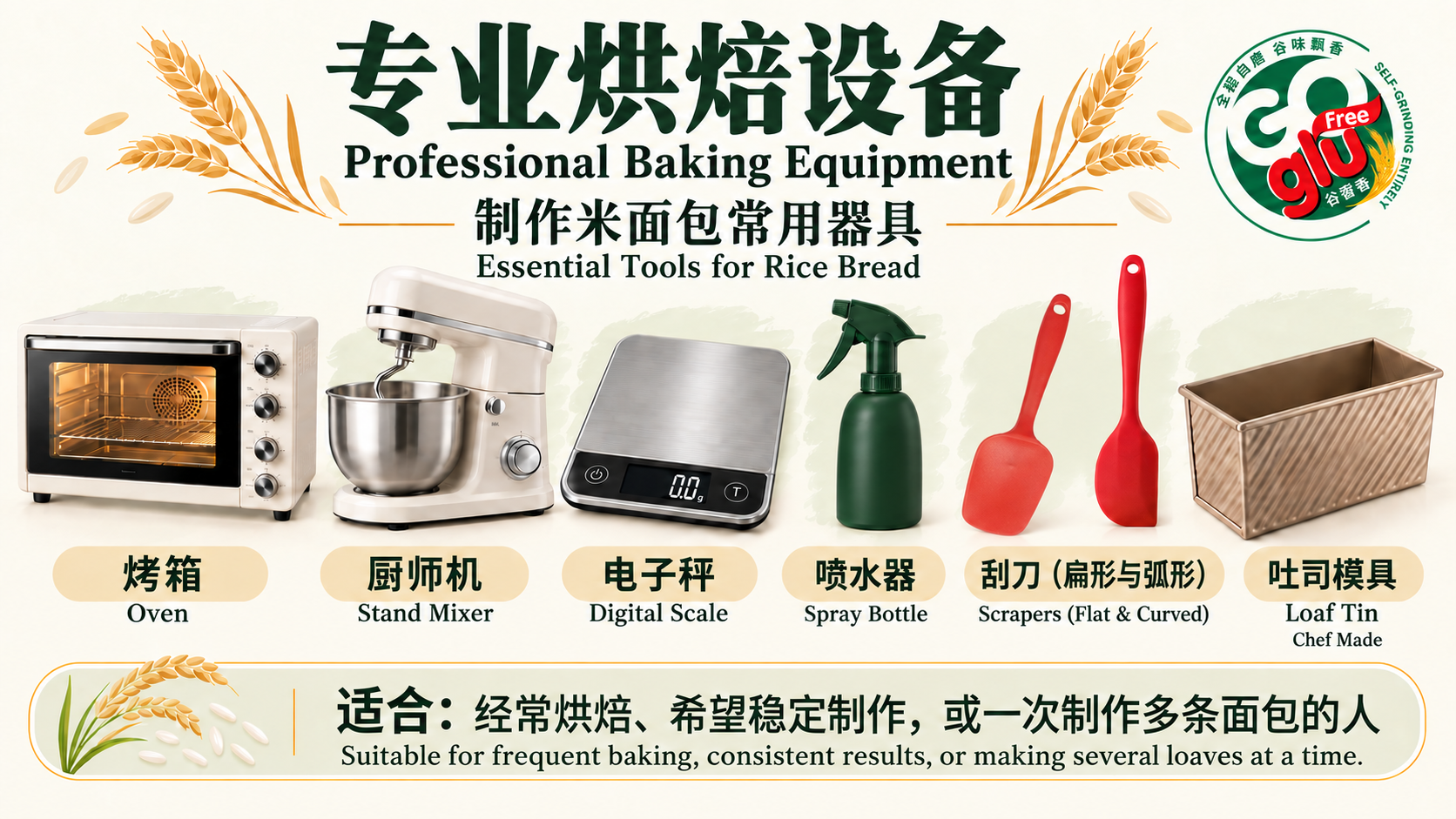
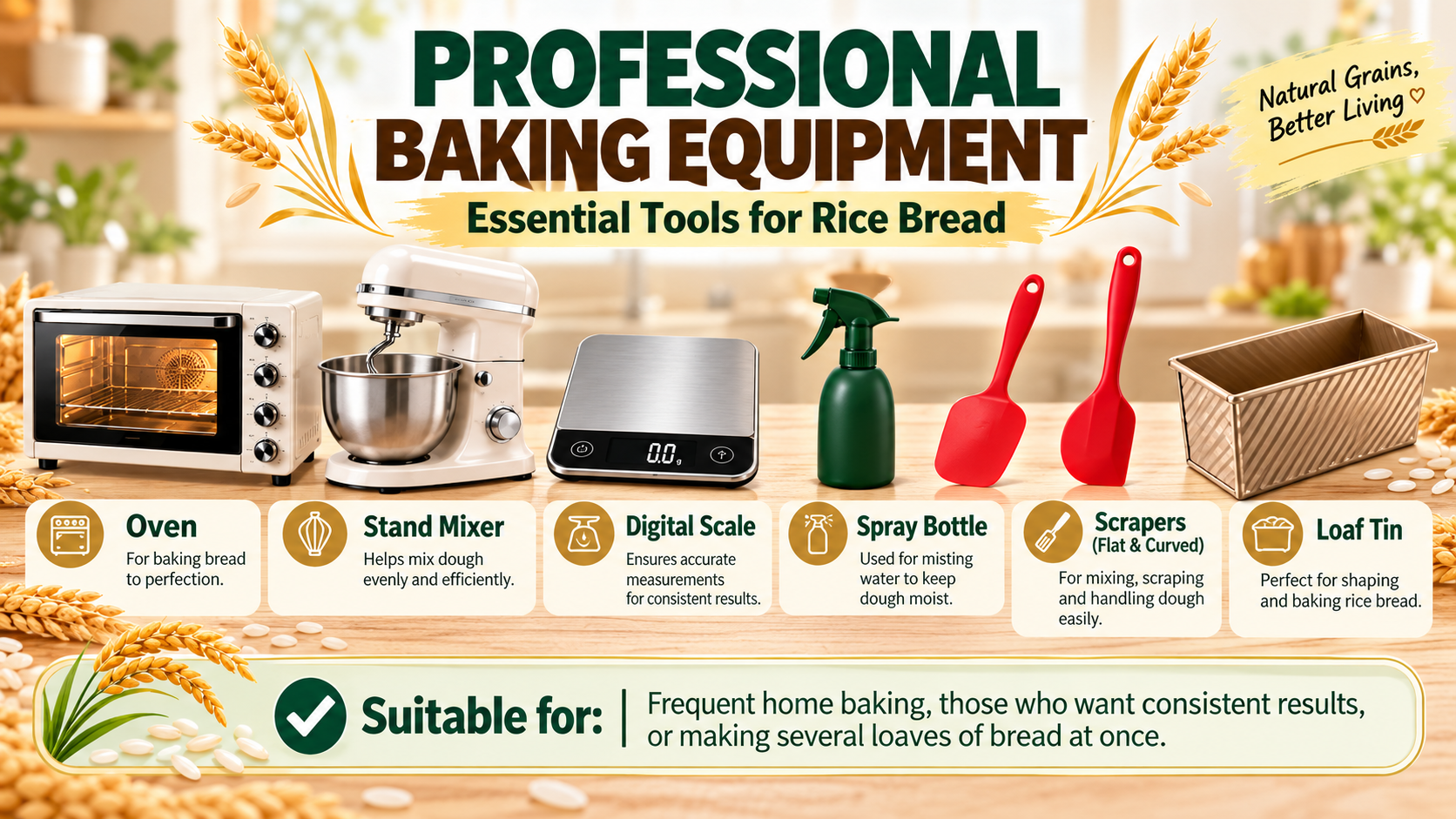
烤箱、厨师机、电子秤、温度计和吐司模具等,适合经常烘焙或需要稳定制作的人使用。厨师机可以协助搅拌,烤箱则能较均匀地加热。
家用简易器具
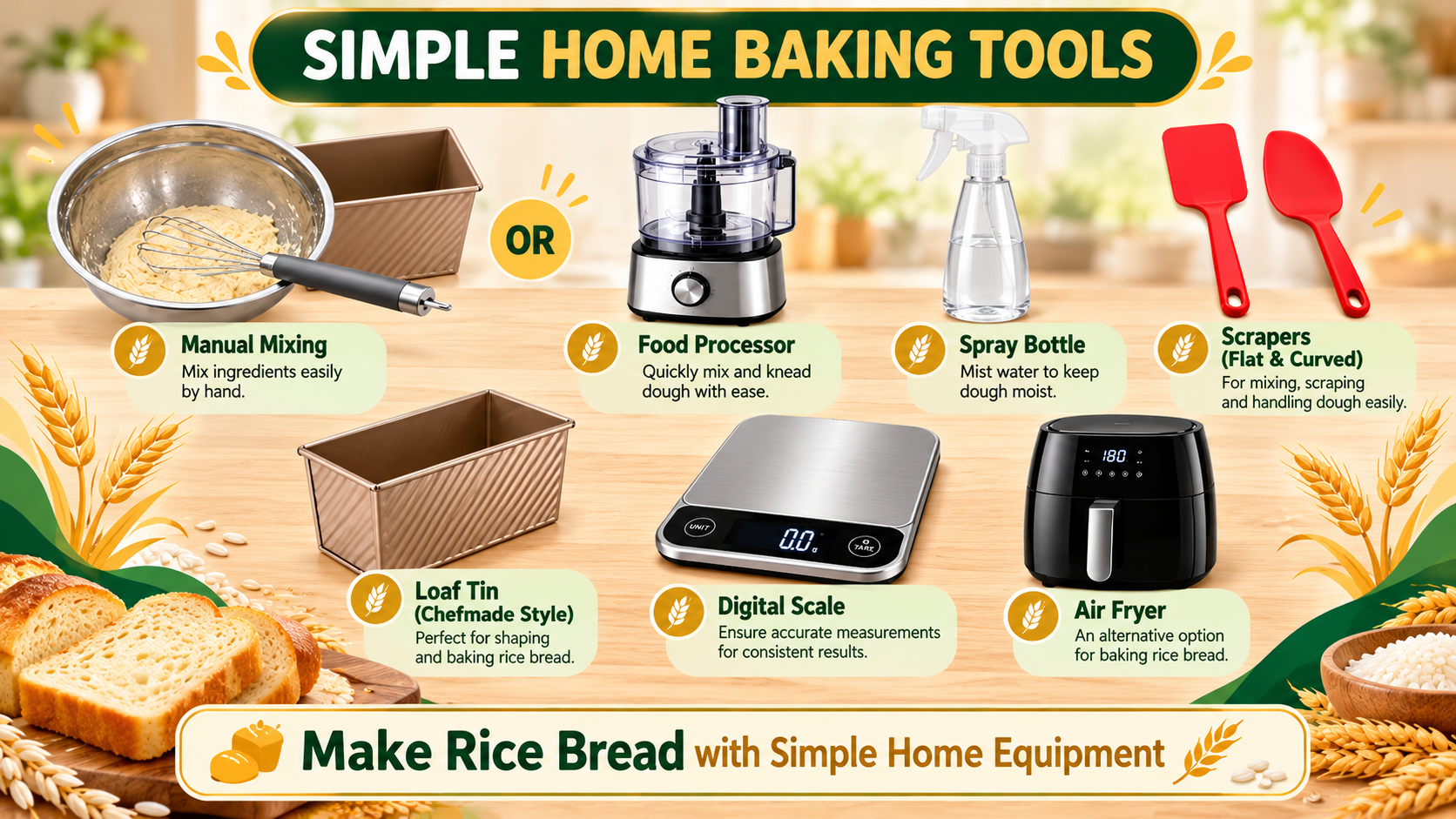
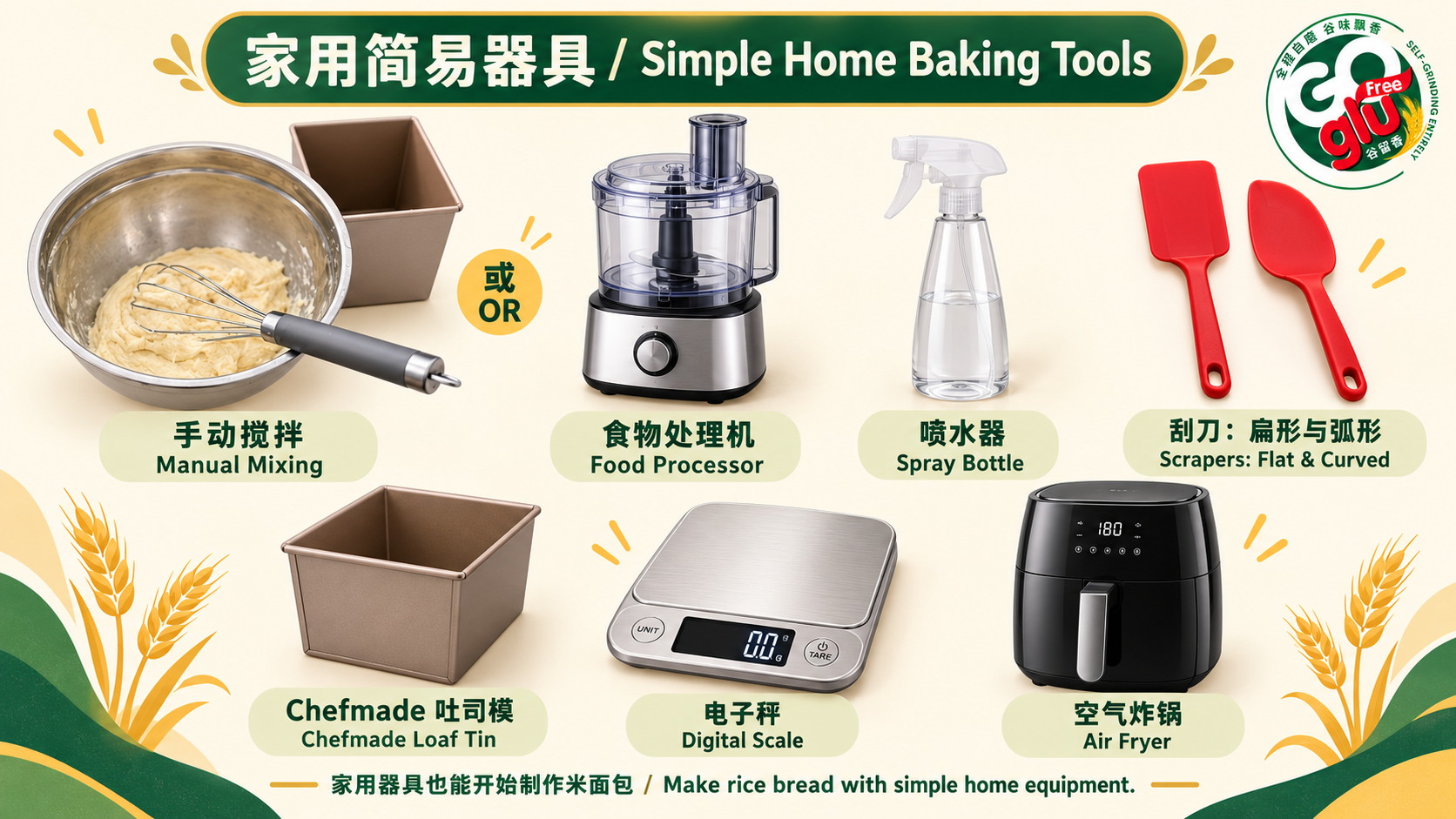
在家制作时,可使用食物处理器或手动工具混合材料,再用家用烤箱或空气炸锅烘烤。电子秤、搅拌盆和合适的烤模,也能帮助材料比例和成品大小保持稳定。
不同设备的容量、加热方式和温度表现会有差异,因此烘烤时间可能需要调整。建议先依照食谱操作,并观察面包的实际状态。
**小提醒:**使用空气炸锅时,要确认烤模能放入内锅,并预留热气流通空间;温度和时间请参考对应食谱,不同机型可能需要微调。
Gluten-Free Baking Basic
1. How Is Gluten-Free Baking Different from Conventional Baking?
The main difference lies in how the flour provides structure.
Wheat flour contains gluten. When mixed and kneaded, it forms an elastic network that helps trap gas produced during fermentation. This allows bread to rise and gives it the familiar stretch and chew of wheat bread.
Gluten-free flour does not form the same network. Instead, recipes often use a combination of grain flours, starches, fibres, eggs, or binding ingredients to help the batter hold its shape, retain moisture, and set during baking. The batter’s consistency, mixing method, fermentation, and final texture can therefore differ from those of conventional bread.
In short, a wheat bread recipe cannot simply be used as-is for gluten-free baking. The ingredients and method need to suit the flour blend.
Rice bread recipes are developed specifically for Goglufree premixes. Using flour from another brand or a different blend may produce different results.
2. The Role of Yeast, Oil & Grains in Rice Bread
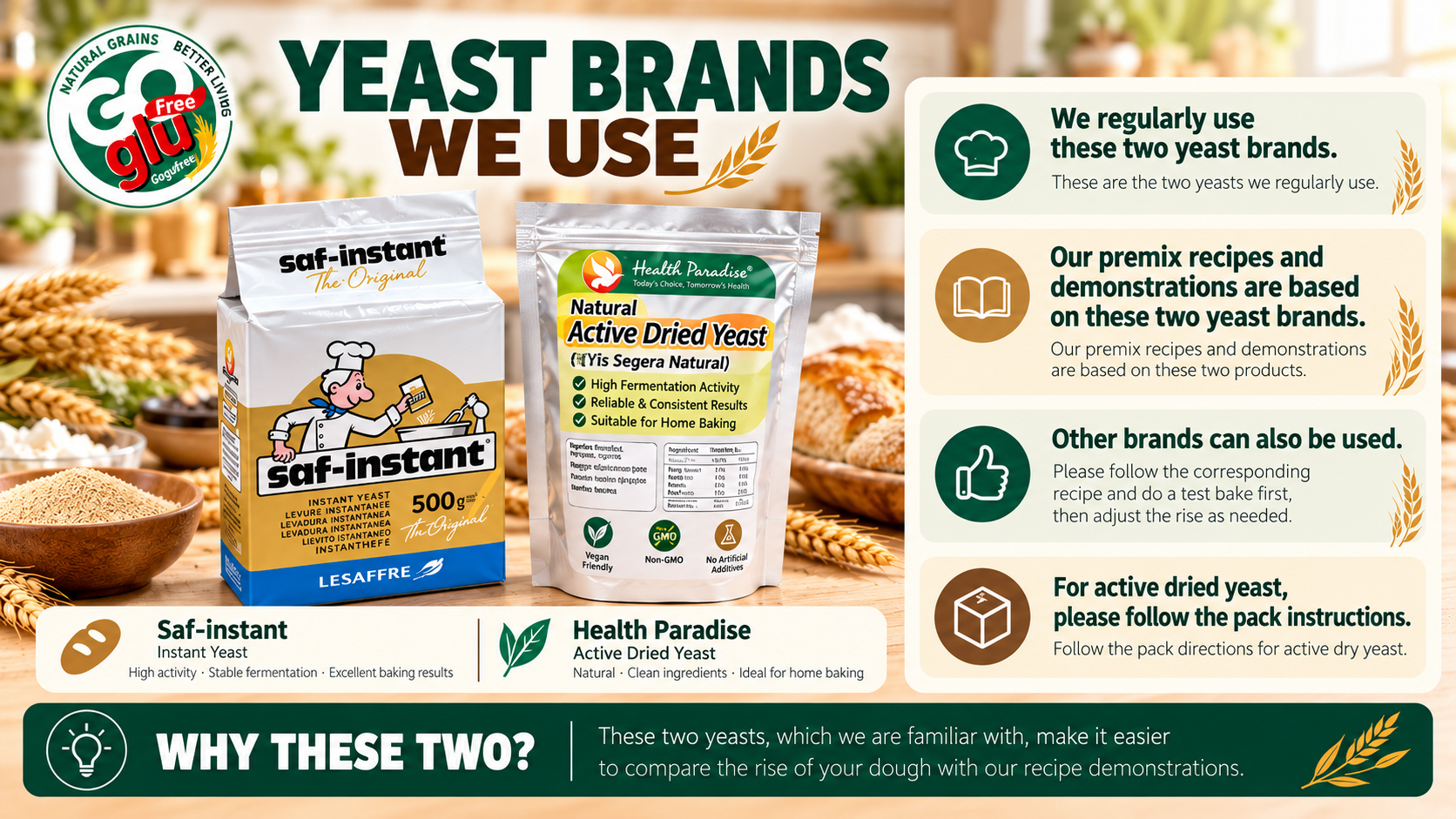
Yeast | Helps the Bread Rise
Yeast ferments the sugar in the recipe and produces gas, causing the batter to expand and helping the bread develop a lighter, more aerated structure. Fermentation time and conditions can affect the height and texture of the finished bread.
Oil | Adds Softness & Moisture
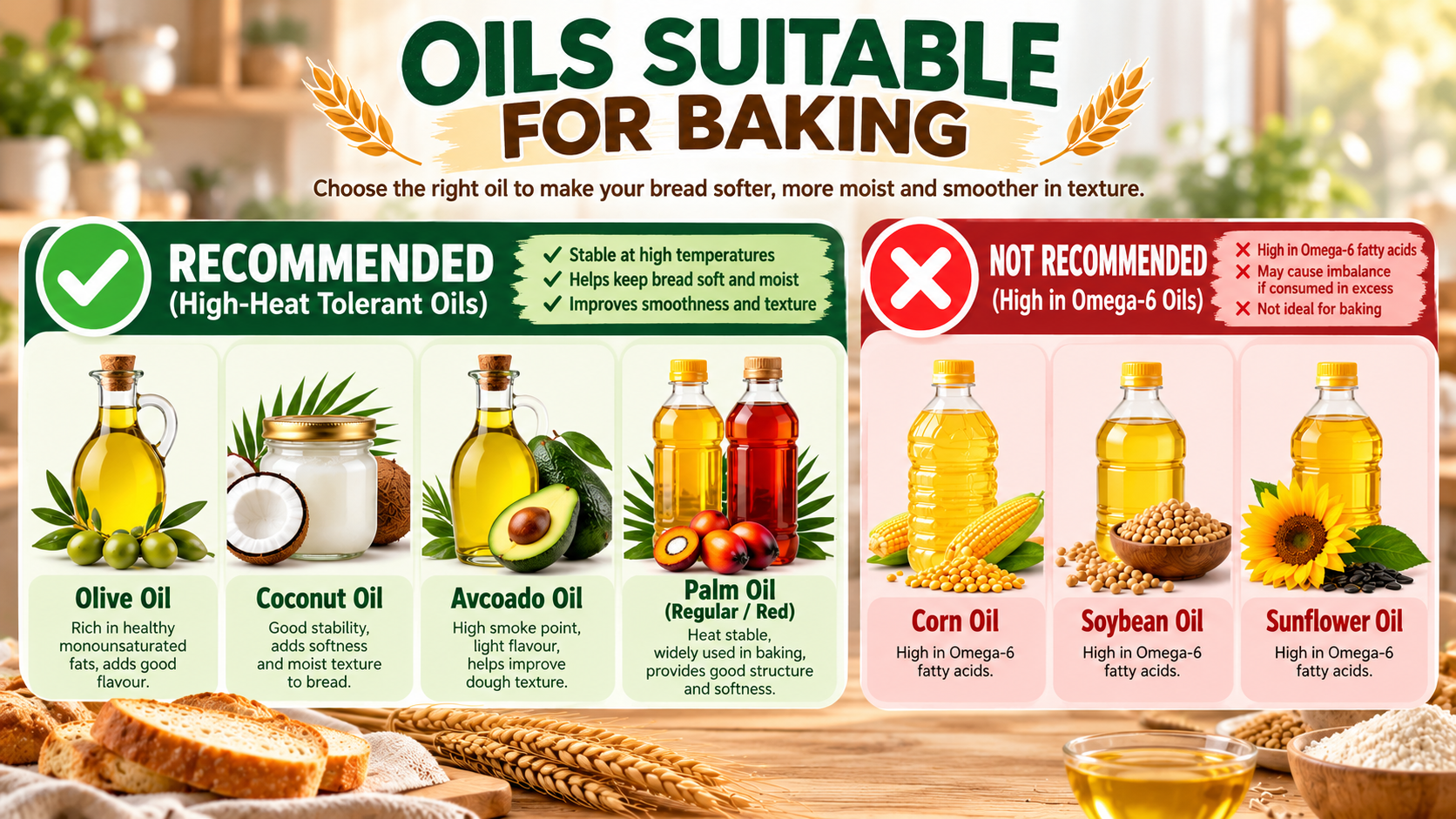
Oil helps give the bread a softer, more moist texture and a smoother mouthfeel. Different types and amounts of oil can also influence the aroma and texture of the finished bread.
However, choosing the right type of oil for baking is also very important.
Grains | Create Distinctive Flavours & Textures
Different grains contribute their own natural colours, aromas, and textures. For example, brown rice, millet, black rice, red rice, and pearl rice each produce bread with a different character.
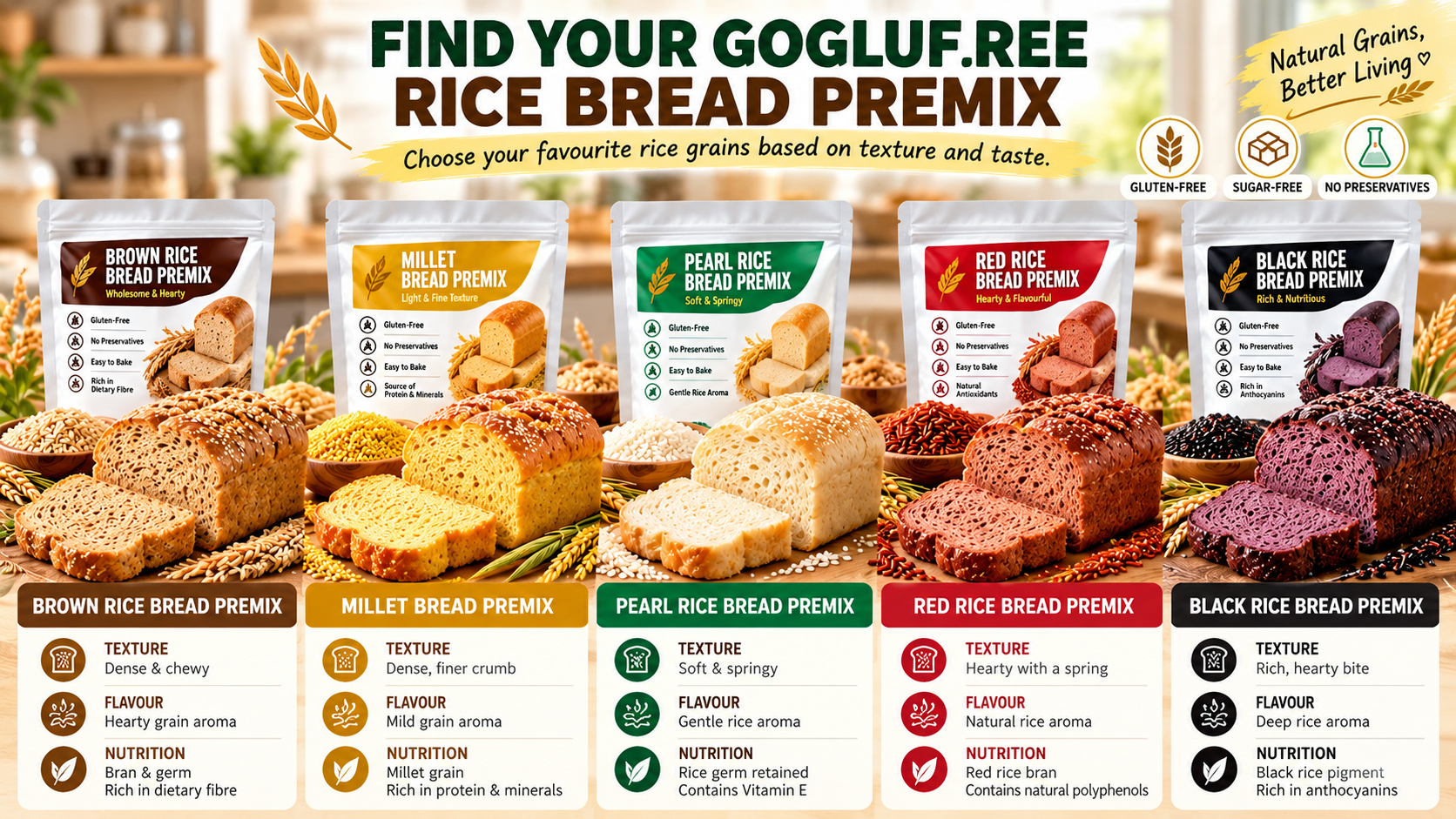
The water absorption and fineness of the grain flour can also affect the consistency of the batter and the final texture. Therefore, each recipe needs to be formulated according to the characteristics of the flour.
Tip: Goglufree Rice Bread recipes are specifically developed according to the formulation of each corresponding premix. Using a different brand of flour or changing the ingredient ratios may affect fermentation and the final results.
3. Baking Equipment: Professional Equipment vs. Simple Home Kitchen Tools
You don’t need a complete set of professional baking equipment to make rice bread.
By understanding the purpose of each tool and choosing the equipment that best suits your needs,
you can easily get started and practise at home.
Professional Baking Equipment
You don’t need a complete set of professional baking equipment to make rice bread. By understanding the purpose of each tool and choosing the equipment that suits your needs, you can start practising with confidence.
Equipment such as an oven, stand mixer, digital scale, thermometer, and loaf pan is suitable for those who bake regularly or want more consistent results.
Simple Home Baking Equipment
When making rice bread at home, you can use a food processor or simple manual tools to mix the ingredients, then bake with a home oven or air fryer.
A digital scale, mixing bowl, and suitable baking mould can also help keep ingredient measurements and the size of the finished bread more consistent.
Different appliances vary in capacity, heating method, and temperature performance, so baking times may need to be adjusted. We recommend following the recipe first and observing the actual condition of the bread during baking.
Tip: When using an air fryer, make sure the baking mould fits comfortably inside the basket and leaves enough space for proper hot-air circulation. Follow the temperature and baking time stated in the corresponding recipe, and make small adjustments if necessary, as different air fryer models may perform differently.