

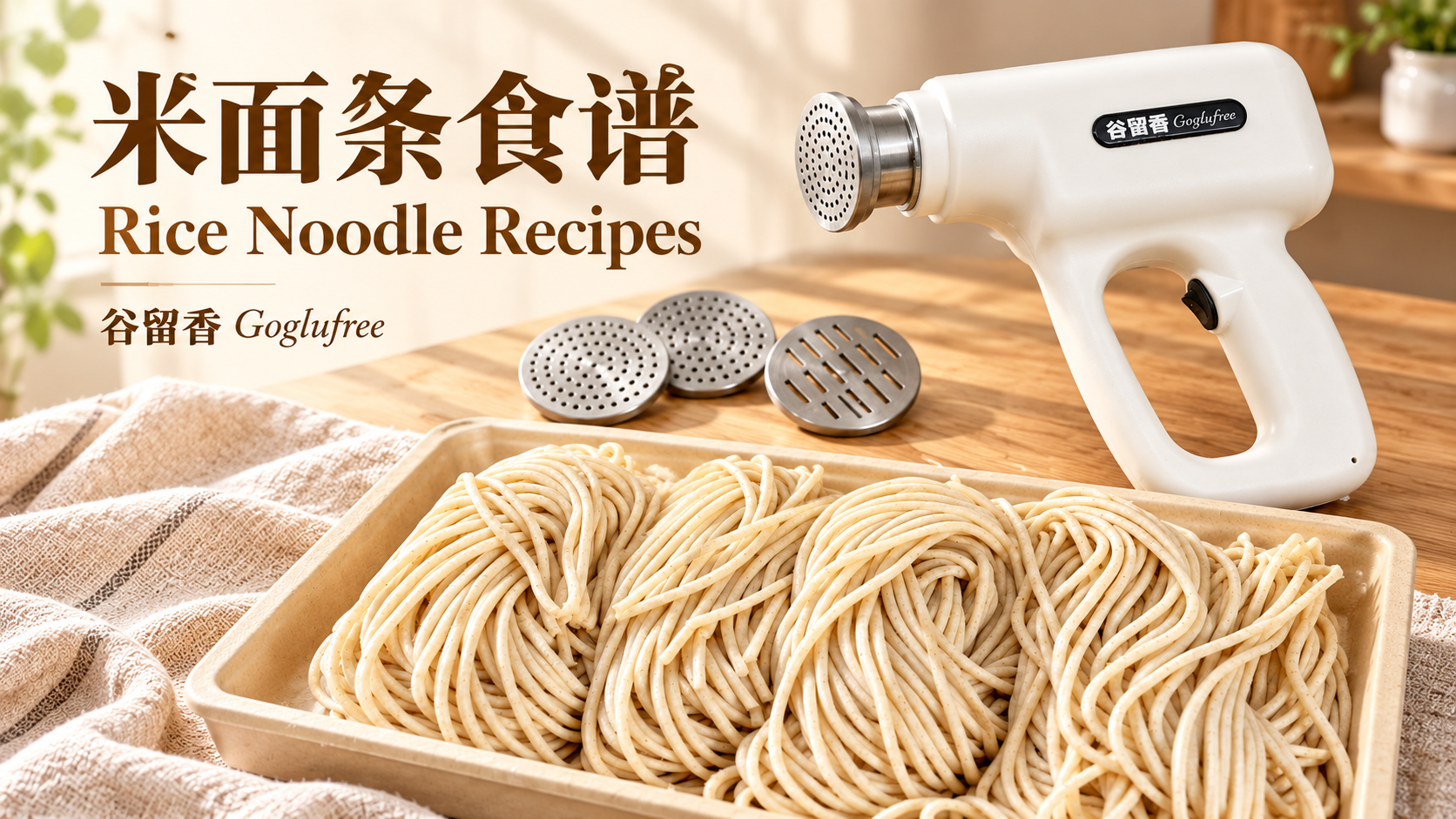
无线制面机 Q & A / Cordless Noodle Maker Q&A
Q1:制面机第一次使用前,必须注意什么事项?
A1:
第一次使用制面机前,请先将机器充电4小时。
🔌 充电时,制面机手柄后端会显示红色指示灯。
🔋 完成首次充电后,即可正常使用制面机。
Q1: What should I do before using the noodle maker for the first time?
A1:
Before using the noodle maker for the first time, please charge it for 4 hours.
🔌 While charging, a red indicator light will appear at the back of the handle.
🔋 Once the initial charging is completed, the noodle maker is ready to use


Q2:如果米面团做好后,突然有急事无法马上制作面条,该如何处理?
A2:
首先,请用保鲜膜将面团包好,避免面团接触空气后风干。
⏰ 如果只是暂时离开约1小时:
可以将包好的面团暂时放在室温环境,回来后再继续制作即可。
❄️ 如果超过1小时:
建议将面团放入冰箱冷藏,不建议冷冻。冷藏约可保存 3–5天。
当您准备再次制作面条时:
- 将面团从冰箱取出,放在室温下回温。
- 回温过程中,面团表面可能会出现一些湿润或轻微**“出水”**的情况,这是可能发生的现象。
- 请勿再添加面粉或水。
- 只需将面团重新放入揉面袋中继续揉搓,直到恢复到原本适合制面的柔软度,即可继续制作。
Q2: What should I do if I have already prepared the rice noodle dough but suddenly need to leave before making the noodles?
A2:
First, wrap the dough properly with cling film to prevent it from drying out.
⏰ If you will be away for about 1 hour:
You may leave the wrapped dough at room temperature and continue making the noodles when you return.
❄️ If it will be more than 1 hour:
We recommend keeping the dough refrigerated, not frozen. It can be refrigerated for approximately 3–5 days.
When you are ready to make the noodles:
- Remove the dough from the refrigerator and allow it to return to room temperature.
- The dough may become slightly wet or release a little moisture as it warms up.
- Do not add any additional flour or water.
- Simply place the dough back into the kneading bag and knead it again until it returns to the original soft consistency suitable for noodle making.
Then you can continue making your fresh noodles as usual. 🍜
Q3:为什么我做出来的面团很黏,而且制作出来的面条都黏在一起?
A3:
这种情况通常都是因为水分过多造成的。
如果您已经完全按照黄爸爸提供的食谱操作,但面团还是很黏,建议检查以下几点:
⚖️ 1. 检查电子秤是否准确
请确认家里的电子秤能够正常、准确地称重,尤其是水的重量。
💧 2. 水分必须以克(g)计算
黄爸爸的食谱统一使用 gram / 克(g) 作为计量单位,包括清水。
👉 不建议使用 litre / ml(容量) 来代替食谱中的克数进行测量,因为使用不同量具或测量方式时可能产生误差,导致实际加入的水分过多。
🍜 3. 水分过多会直接影响面团状态
一旦面团太湿,就容易变得黏手,挤出来的面条也会互相黏在一起。
📌 记住:制作米面条时,水分的准确度非常重要。
Q3: Why is my dough very sticky, and why do the noodles stick together after extrusion?
A3:
This is usually caused by too much water in the dough.
If you have followed Huang Baba’s recipe exactly but the dough is still too sticky, please check the following:
⚖️ 1. Check the accuracy of your digital scale
Make sure your kitchen scale is working properly and measuring accurately, especially when weighing the water.
💧 2. Measure the water by weight in grams (g)
All of Huang Baba’s recipes use grams (g) as the standard unit of measurement, including the water.
👉 We recommend weighing the water according to the recipe rather than relying on volume measurements, as measurement differences may result in too much water being added.
🍜 3. Too much water will affect the dough consistency
If the dough is too wet, it will become sticky, and the noodles may stick together after extrusion.
📌 Remember: Accurate water measurement is very important when making rice noodles.
Q4:为什么新鲜现做的面条煮起来没有问题,但冷冻后的面条在烹煮时却容易黏在一起?
A4:
这种情况通常有几个原因,其中最重要的是面团的水分比例。
🍜 1. 现煮面条与冷冻面条的水分要求不同
新鲜制作后马上烹煮的面条,与准备冷冻保存的面条,在水分控制上会有所不同,详细比例可参考食谱。
❄️ 如果面条准备冷冻保存:
请特别注意,水分千万不要过量。
👉 建议以 130g 水为标准。
如果面团水分过多,面条在冷冻后容易互相黏住,之后直接下锅烹煮时就会比较难分离。
📌 记住:准备冷冻的面条,水分控制非常重要
Q4: Why do my freshly made noodles cook well, but the noodles stick together after they have been frozen?
A4:
There can be several reasons, but one of the most important factors is the amount of water used in the dough.
🍜 1. Fresh noodles and noodles prepared for freezing require different water levels.
The amount of water used for noodles that are cooked immediately may differ from noodles that are intended for frozen storage. Please refer to the recipe for the recommended amount.
❄️ If you plan to freeze the noodles:
It is very important not to use too much water.
👉 Use 130g of water as the standard amount.
If the dough contains too much moisture, the noodles may stick together after freezing and become difficult to separate during cooking.
📌 Remember: Proper water control is especially important when preparing noodles for freezing.
Q5:如果我想把面条冷冻保存,但制作出来的面条看起来比较湿,还有什么方法可以补救?
A5:
如果面条只是稍微偏湿,并没有湿到严重黏在一起,还是可以补救的。👍
🌬️ 可以利用小风扇帮助降低面条表面的湿度:
- 将制面机放在风扇前方进行出面。
- 开启小风,让面条在挤出的同时轻轻吹干。
- 观察并检查面条表面的湿度。
- 当面条表面明显变得较干爽、不容易互相黏住后,就可以装入盒子中进行冷冻保存。
📌 注意:不需要把面条完全吹干。
主要目的是降低表面的多余水分,减少冷冻后面条互相黏在一起的情况。
Q5: If I want to freeze the noodles but they look slightly too wet, is there any way to fix them?
A5:
Yes. If the noodles are only slightly too wet and not excessively sticky, they can still be saved. 👍
🌬️ Use a small fan to reduce the surface moisture:
- Place the noodle maker in front of a small fan while extruding the noodles.
- Use a gentle airflow to lightly dry the noodles as they come out.
- Check the surface moisture of the noodles.
- Once the noodles feel less moist and are less likely to stick together, place them into a container and freeze them for storage.
📌 There is no need to dry the noodles completely.
The purpose is simply to reduce excess surface moisture and help prevent the noodles from sticking together after freezing.